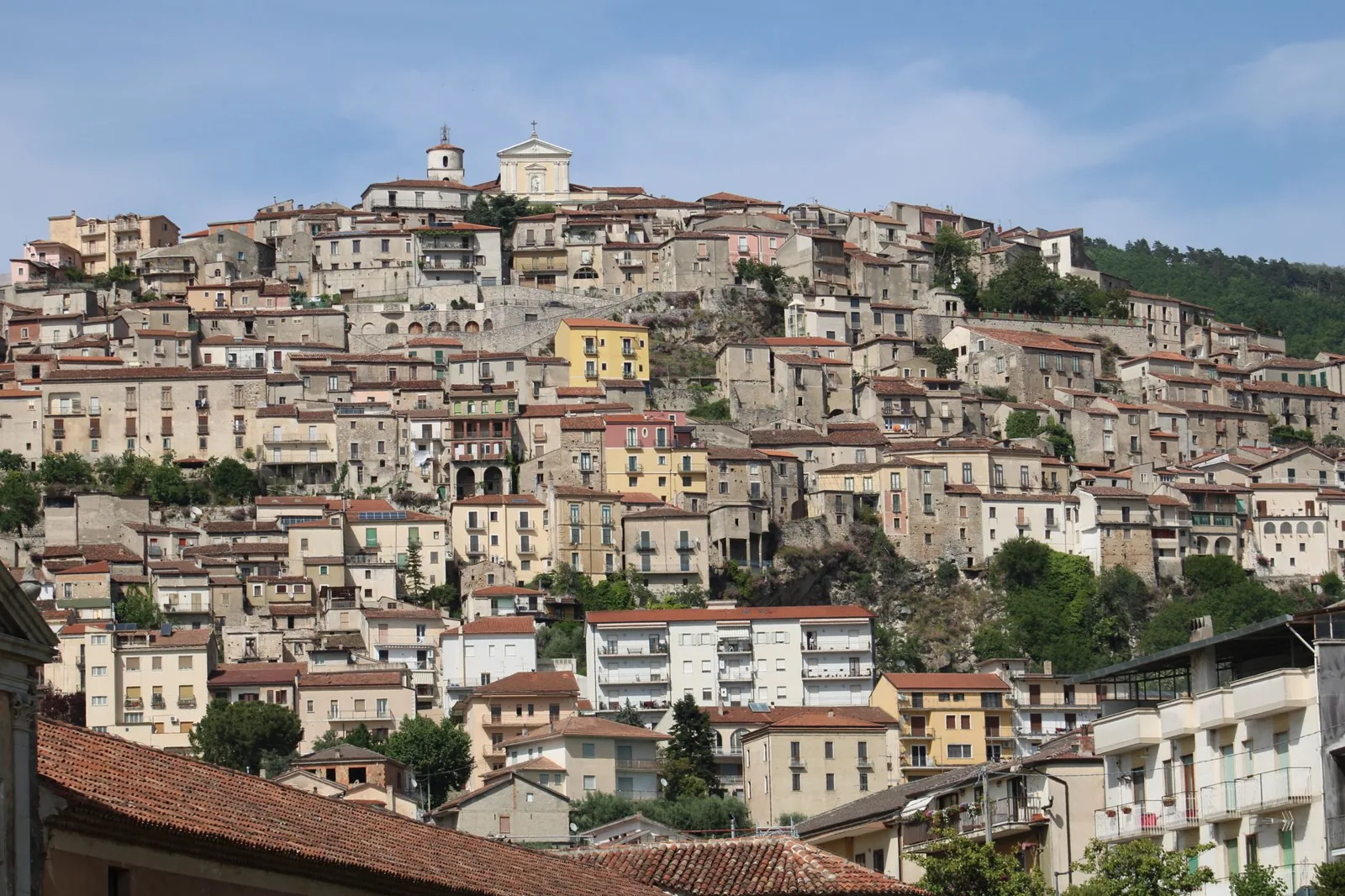
Italy has a reputation for cheap houses, mostly thanks to the one-euro schemes. The listings that actually come up for sale tell a more useful story. On 6 October 2026, 83 of the 480 Italian homes in the European Cribs catalogue had an asking price below €120,000 — and 14 of them were below €50,000. These are asking prices from our own catalogue, not official market statistics, but they show clearly where a modest budget still works.
The numbers
| Italian homes under €120,000 | 6 October 2026 |
|---|---|
| Listings under €120,000 | 83 of 480 |
| Listings under €50,000 | 14 |
| Median asking price | €78,000 |
| Median living area | 110 m² |
| Median price per m² | about €620 |
| Apartments / houses | 55 / 28 |
Where the listings are
The cheaper end of our Italian catalogue sits in the south and in Abruzzo, far from the cities and coasts that dominate international searches:
- Caltanissetta and San Cataldo (Sicily) – 7 listings in Caltanissetta with a median of €75,000 for about 110 m²; 3 in neighbouring San Cataldo at a median of €65,000.
- Pietrelcina (Campania) – 6 listings at a median of €55,000, typically larger village houses of around 142 m².
- Scalea (Calabrian coast) – 7 listings at a median of €67,500, mostly compact apartments of around 54 m².
- Vasto (Abruzzo) – 4 listings at a median of €108,500 for about 108 m².
The pattern is familiar: on the coast the money buys a small flat; inland, the same budget buys a whole village house.
What to check before you fall for the price
- Condition and structure. At these prices many houses need work — roof, damp, wiring, plumbing. Have a surveyor (geometra) inspect the property before you sign anything.
- Seismic risk. Large parts of southern Italy and Abruzzo are classified as earthquake zones. Ask how the building is constructed and whether it has been reinforced.
- Cadastral conformity. The house must match its plans at the land registry (catasto). Unregistered extensions are common in older rural houses and have to be regularised before the deed.
- Access and services. Check year-round road access, water, drainage or septic tank, and mobile and broadband coverage.
The purchase taxes
For a home bought from a private seller, Italy charges registration tax (imposta di registro) of 9% on a second home, or 2% if it qualifies as your prima casa — which generally means moving your residence to that municipality within 18 months. The minimum is €1,000 in both cases, plus fixed mortgage and cadastral taxes of €50 each.
The detail many foreign buyers miss: when an individual buys a home from a private seller, the tax can be calculated on the property’s cadastral value instead of the price. In rural areas that value is often well below the asking price, so the real tax bill can be far lower than 9% of what you pay. Buying from a developer works differently: VAT applies instead (10% for a second home, 4% for a prima casa), with fixed registration, mortgage and cadastral taxes of €200 each. Notary fees come on top, and buyer-side agency fees are common in Italy.
Bottom line
Under €120,000 is a real budget in Italy — but mostly in Sicily, Campania, Calabria and Abruzzo, and mostly for homes that deserve a careful look. Choose the region first, then the house.
Browse current homes for sale in Italy, or get a first, conservative estimate with our buying-costs calculator (it assumes 9% on the full price, so treat it as a worst case).
Catalogue figures are asking prices of homes listed in the European Cribs catalogue on 6 October 2026, not official market statistics. Tax rules as checked on 6 October 2026; they change and depend on your personal situation. This article is general information, not legal, tax or investment advice — confirm the details with a local lawyer before you buy. Cover photo: Cristina Serote / Pexels.
Browse homes for sale in Italy
Curated homes for sale across Europe — updated every Saturday
Browse Properties