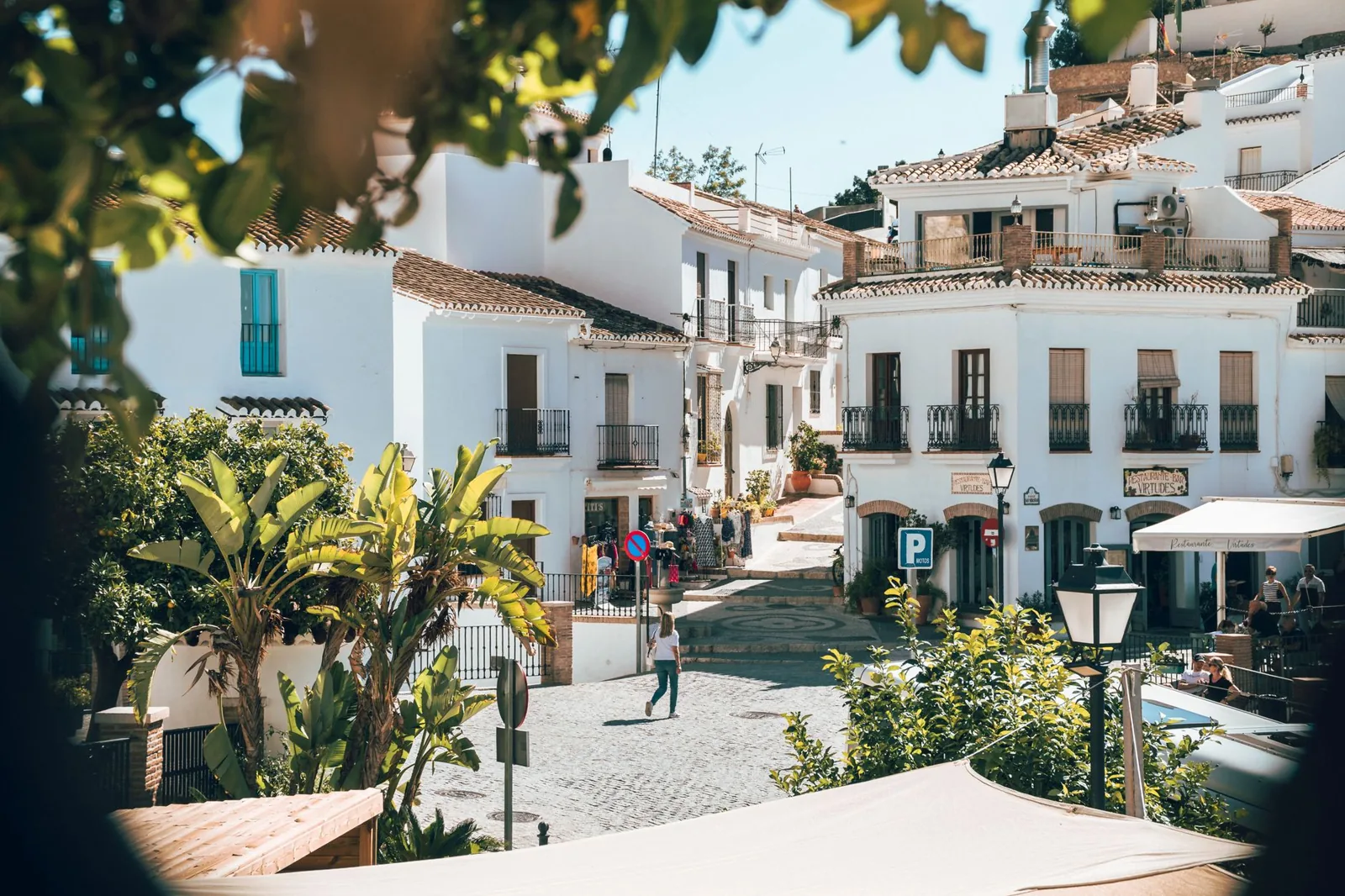
This guide is general information, verified in October 2026. Rules, rates and taxes can change, so always confirm current details with a local lawyer, notary or tax advisor before you commit to a purchase. The catalogue figures below describe listings on our site on 6 October 2026 and show asking prices, not official statistics.
Can foreigners buy?
There are no restrictions on foreign ownership of property in Spain, and you do not need to be a resident to buy. You will, however, need a NIE, the Spanish foreigner identification number, before you can sign for a property. This is a separate requirement from residency and applies to every overseas buyer, whether from inside or outside the EU.
Costs and taxes on top of the price
On a resale home, buyers pay transfer tax (ITP), which ranges from 6 to 11 percent depending on the region; 8 percent is a reasonable working assumption when budgeting. New-build homes are taxed differently: 10 percent VAT plus stamp duty (AJD) of around 1.5 percent, instead of ITP. On top of whichever tax applies, allow around 1.2 percent of the price for notary and land registry fees, and around 1 percent if you engage an independent lawyer, which is recommended. Agent fees are usually paid by the seller, not the buyer.
- Resale homes: ITP of 6 to 11 percent (8 percent typical), plus notary and registry (around 1.2 percent) and legal fees (around 1 percent).
- New builds: 10 percent VAT plus around 1.5 percent AJD stamp duty, plus notary, registry and legal costs.
- Agent fees: typically covered by the seller.
How the purchase works
A Spanish purchase generally follows three stages. First, a reservation on the property. Second, a private contract known as the arras, under which the buyer pays a deposit, commonly 10 percent of the agreed price, and both parties commit to the sale. Third, the public deed, or escritura, which is signed in front of a notary and formally transfers ownership. Your NIE needs to be in place before you sign, so it is worth applying for it as early as possible in the process.
What homes cost in our catalogue
Our catalogue for Spain held 611 listings on 6 October 2026. The median asking price across all listings was 550,000 euros, with a median size of 122 square metres and a median price per square metre of 4,570 euros. The lower quartile of asking prices was 150,000 euros and the upper quartile was 1,199,000 euros. Around 18 percent of listings, or 112 homes, were priced under 100,000 euros.
By property type, apartments made up the largest share of the catalogue with 351 listings, followed by villas (79), penthouses (51) and chalets (49).
The most listed places in the catalogue were:
- Madrid: 213 listings, median asking price 720,000 euros.
- Barcelona: 61 listings, median asking price 1,600,000 euros.
- València: 52 listings, median asking price 735,000 euros.
- Denia: 22 listings, median asking price 509,000 euros.
- Javea: 21 listings, median asking price 1,236,000 euros.
- Torrevieja: 12 listings, median asking price 194,000 euros.
Budget shapes what is realistically on offer. At 100,000 euros, there were 68 listings in range, typically 82 square metres with 3 bedrooms. At 250,000 euros, there were 47 listings in range, typically 82 square metres with 2 bedrooms. At 500,000 euros, there were 69 listings in range, typically 110 square metres with 3 bedrooms.
| Budget | Listings in range | Typical size | Typical bedrooms |
|---|---|---|---|
| 100,000 euros | 68 | 82 m2 | 3 |
| 250,000 euros | 47 | 82 m2 | 2 |
| 500,000 euros | 69 | 110 m2 | 3 |
Residency and living there
Buying a home in Spain does not, on its own, grant residency. The Spanish Golden Visa for property investors was abolished on 3 April 2025, so purchasing a property no longer leads to a residence permit through that route. Non-EU buyers who want to live in Spain typically look instead at the non-lucrative visa or the digital nomad visa, each with its own separate requirements.
If you are considering letting the property out to holidaymakers, be aware that tourist-rental licences are regulated at regional level, and many cities place restrictions on them. Barcelona, for example, plans to withdraw all of its tourist-rental licences by 2028. Check the specific rules for the region and city you are interested in before assuming a holiday-letting income is straightforward to arrange.
Before you view
Start your NIE application early, since you will need it before signing anything binding. Build the full range of extra costs, not just the headline tax, into your budget: for a resale home that means ITP plus notary, registry and legal fees on top of the asking price. Engage an independent lawyer who is not connected to the seller or agent, and have them check the property's legal status, debts and planning situation before you sign the arras contract and pay a deposit. If letting the property matters to your plans, confirm the local rules on tourist-rental licences for that specific region before you commit, rather than after.
Browse current homes for sale in Spain, estimate taxes and fees with the buying-costs calculator, or read the latest Journal article on Spain.
Rules, taxes and fees are general information verified in October 2026 and can change; regional rules may differ. Catalogue figures are asking prices of homes listed in the European Cribs catalogue on 6 October 2026 and are not official statistics. This guide is not legal, tax or investment advice — for an actual purchase, work with a local lawyer, notary or tax advisor. Cover photo: Mihai Vlasceanu / Pexels.
Browse homes for sale in Spain
Curated homes for sale across Europe — updated every Saturday
Browse Properties