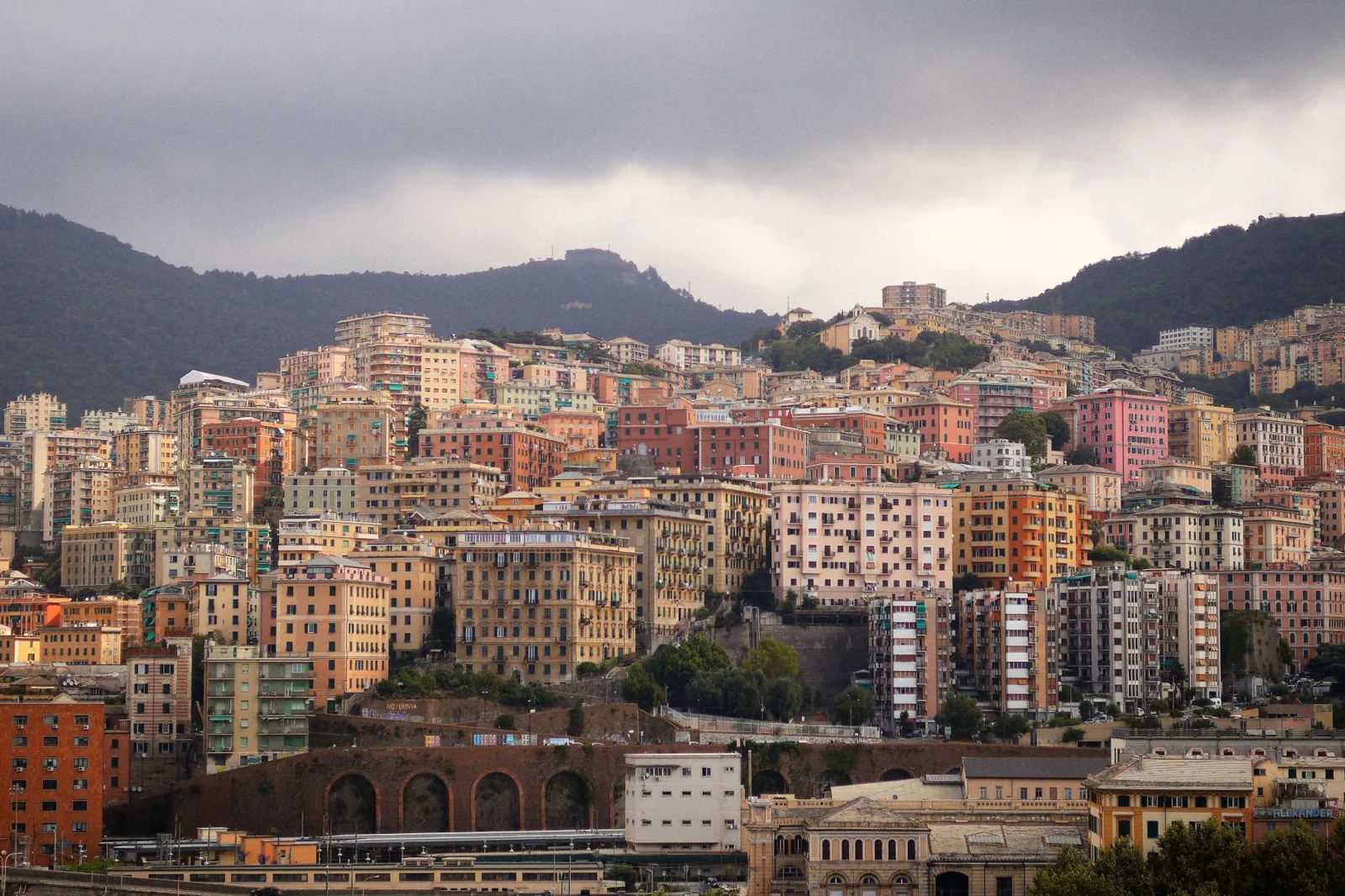
This guide sets out what international buyers need to know about purchasing a home in Italy. The market figures below describe our own catalogue as it stood on 6 October 2026 — asking prices for homes actually listed for sale, not official statistics. The rules, rates and costs are general information verified in October 2026 and can change, so always confirm current details with a local lawyer, notary or tax advisor before you commit to a purchase.
Can foreigners buy?
EU citizens can buy property in Italy without restriction. Non-EU citizens can buy if their home country grants Italians the same right, a principle known as reciprocity. This reciprocity currently covers the United States, the United Kingdom, Canada and Australia, among others. Whatever your nationality, you will need a codice fiscale, an Italian tax number, before you can sign a contract or complete a purchase.
Costs and taxes on top of the price
On a resale home, registration tax is 9 percent of the value for a second home, or 2 percent if the property will be your prima casa — meaning your main home, with residence taken up in the municipality within 18 months. Either way there is a minimum charge of 1,000 euros, and the tax is usually calculated on the lower cadastral value rather than the price actually paid. New-build homes are taxed differently, with VAT applying instead of registration tax: 10 percent generally, or 4 percent for a prima casa. A handful of smaller fixed charges and the notary apply on top, and if you use an agent, the buyer typically covers the fee.
| Cost item | Rate |
|---|---|
| Registration tax, resale, second home | 9% |
| Registration tax, resale, prima casa | 2% (min. 1,000 euros) |
| VAT, new build, second home | 10% |
| VAT, new build, prima casa | 4% |
| Fixed mortgage and cadastral taxes | 50 euros + 50 euros |
| Notary and land registry | around 2% |
| Agent fee (buyer) | around 3% plus VAT |
How the purchase works
The process generally starts with a written offer, the proposta. Once the seller accepts, buyer and seller sign a preliminary contract, the compromesso, at which point the buyer pays a deposit, the caparra, commonly between 10 and 20 percent of the price. The sale is finalised at the deed, the rogito, which is signed in front of a notary. Each stage is a distinct legal step, and it is worth having independent advice before signing either the compromesso or the rogito, given the deposit and tax obligations attached to each.
What homes cost in our catalogue
On 6 October 2026, our catalogue listed 480 homes for sale across Italy. The median asking price was 580,000 euros for a median size of 130 square metres, working out to a median of 4,970 euros per square metre. Prices vary widely: the lower quartile of listings asks 260,000 euros, while the upper quartile reaches 1,220,000 euros. At the more affordable end, 13 percent of listings — 63 homes — are asking under 100,000 euros.
Apartments are by far the most common property type in the catalogue, with 373 listings, followed by chalets (61), duplexes (24) and penthouses (21).
Budget has a clear effect on what is available. At a budget of 100,000 euros, there are 45 listings in range, typically 120 square metres with 4 bedrooms. At 250,000 euros, there are 35 listings, typically 83 square metres with 3 bedrooms. At 500,000 euros, there are 70 listings, typically 110 square metres with 3 bedrooms.
By location, Milan has the most listings in the catalogue (120), with a median asking price of 1,120,000 euros. Rome follows with 64 listings at a median of 1,070,000 euros, then Naples with 60 listings at 538,000 euros, Bologna with 58 listings at 450,000 euros, Florence with 49 listings at 1,170,000 euros, and Turin with 46 listings at 450,000 euros.
Running costs and practicalities
Once you own a home in Italy, IMU, the annual property tax, applies to second homes every year; main homes are generally exempt from it. Some Italian villages also offer so-called one-euro houses, but these come with renovation obligations, deposits and deadlines attached to the sale, so the nominal price is only the starting point of the commitment.
Before you view
- Apply for your codice fiscale early, since it is needed before any contract is signed.
- Check whether reciprocity applies to your nationality if you are a non-EU buyer.
- Work out whether the home will be a prima casa or a second home, as this changes the registration tax or VAT rate and affects annual IMU liability.
- Budget for the fixed mortgage and cadastral taxes, notary and land registry fees, and the agent fee if one is involved, on top of the asking price.
- Be ready to pay a deposit of 10 to 20 percent at the compromesso stage.
- Engage a local lawyer, notary or tax advisor to guide you through the proposta, compromesso and rogito.
- If considering a one-euro house, read the renovation obligations, deposit and deadlines before making an offer.
Browse current homes for sale in Italy, estimate taxes and fees with the buying-costs calculator, or read the latest Journal article on Italy.
Rules, taxes and fees are general information verified in October 2026 and can change; regional rules may differ. Catalogue figures are asking prices of homes listed in the European Cribs catalogue on 6 October 2026 and are not official statistics. This guide is not legal, tax or investment advice — for an actual purchase, work with a local lawyer, notary or tax advisor. Cover photo: Anna Frame / Pexels.
Browse homes for sale in Italy
Curated homes for sale across Europe — updated every Saturday
Browse Properties