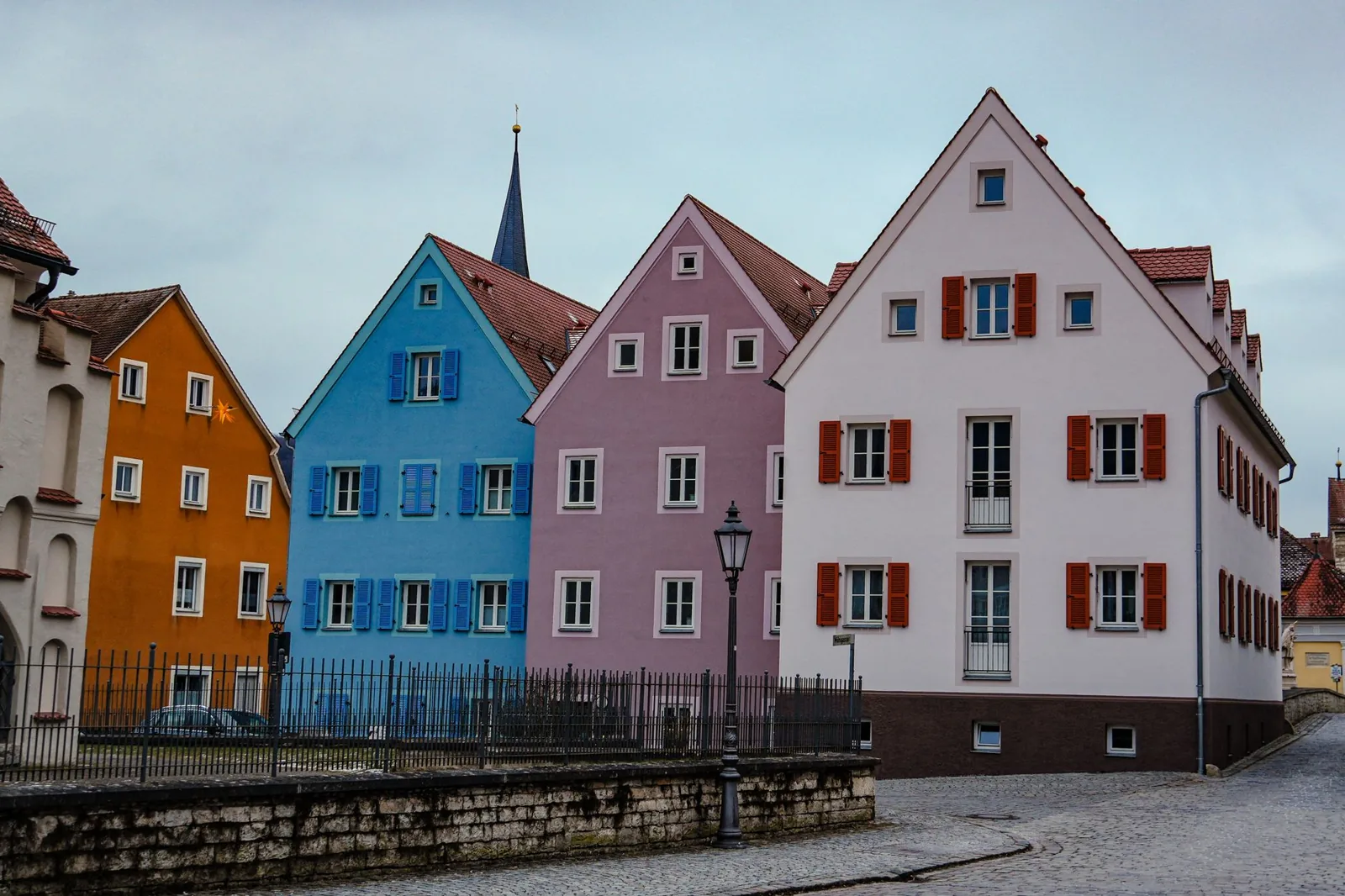
This guide to buying a home in Germany combines general rules on foreign ownership, taxes and the purchase process with a snapshot of our own catalogue of homes for sale in Germany on 6 October 2026. The catalogue figures are asking prices from listings on that date, not official statistics, and will shift as listings change. Rules and rates below are general information verified in October 2026 and can change, so always confirm current terms with a local lawyer, notary or tax advisor before committing to a purchase.
Can foreigners buy?
There are no restrictions on foreign ownership of residential property in Germany. Residency is not required to buy, which means an international buyer can purchase an apartment or house in Germany on exactly the same terms as a German national, without first needing to live in the country, obtain a residence permit or demonstrate any particular connection to Germany. This applies to any residential property in the catalogue, whether the buyer intends to live in it, let it out, or hold it as a long-term purchase.
Costs and taxes on top of the price
Alongside the purchase price, several additional costs apply to every transaction, and together they add a notable amount to the total a buyer needs to budget for:
- Land transfer tax (Grunderwerbsteuer): 3.5 to 6.5 percent of the purchase price, depending on the federal state. Berlin, where most of our catalogue listings are located, charges 6 percent.
- Notary and land register (Grundbuch): around 2 percent of the purchase price, covering the notary's fees and the cost of registering the change of ownership.
- Agent fee: the buyer's share is typically 3.57 percent including VAT. Since 2020, where the seller engaged the agent, the fee must be split between buyer and seller rather than falling entirely on the buyer.
None of these costs are included in the asking prices shown in our catalogue, so buyers should treat the listed figure as a starting point and add the land transfer tax, the notary and land register fees, and the relevant share of the agent fee to arrive at the real total cost of a purchase.
How the purchase works
Every purchase contract for property in Germany must be notarised. A notary prepares the contract, reads it aloud to both parties, and witnesses the signatures, which is a mandatory step rather than an optional safeguard. Ownership of the property does not change hands at the point of signing. Instead, it passes only once the transaction has been entered in the Grundbuch, the German land register. This two-stage process, contract then land register entry, is what formally and legally transfers ownership from seller to buyer, and it applies in the same way regardless of whether the buyer is based in Germany or abroad.
What homes cost in our catalogue
On 6 October 2026, our catalogue listed 115 homes for sale in Germany, and every one of them was an apartment. The median asking price across these listings was 699,000 euros. A quarter of listings were priced at 456,000 euros or below, and a quarter were priced at 1,275,000 euros or above, giving a sense of the spread around the median. The median size was 87 square metres, which works out to a median price of 8,120 euros per square metre. None of the 115 listings were priced under 100,000 euros.
The two places with the most listings in the catalogue were Berlin and Hamburg:
| Place | Listings | Median asking price |
|---|---|---|
| Berlin | 78 | 650,000 euros |
| Hamburg | 32 | 892,000 euros |
Budget has a clear effect on what is available. At a budget of 250,000 euros, 6 listings in the catalogue fall into that range, with a typical size of 35 square metres and 2 bedrooms. At a budget of 500,000 euros, 27 listings fall into that range, with a typical size of 73 square metres and 3 bedrooms, reflecting how far a larger budget extends in terms of space.
Running costs and practicalities
Because residency is not required to own property in Germany, it is entirely possible to buy, hold and manage an apartment from abroad, as long as the notarisation and land register steps are completed correctly at the outset. The notarised contract and the land register extract are the formal proof of ownership, so keeping clear copies of both is worth doing from day one, particularly for an owner who is not resident in Germany and may need to refer back to these documents from a distance. Since every transaction goes through a notary and a public land register, the process is consistent and documented regardless of whether the buyer is in Germany for the purchase or managing it remotely. For anything specific to your own tax or legal position, including how a purchase or any future letting of the property interacts with your personal circumstances, a local lawyer, notary or tax advisor is the appropriate person to ask.
Before you view
Before arranging any viewings, it is worth working out a full budget that includes not just the asking price but the land transfer tax, the notary and land register costs, and the relevant share of the agent fee, since all of these apply on top of the figure shown in a listing. Our catalogue is currently made up entirely of apartments, with a median size of 87 square metres and a median asking price of 699,000 euros, so it is useful to decide in advance where your own budget sits relative to that median. The catalogue shows, for example, that a budget of 250,000 euros tends to reach a smaller, two-bedroom apartment, while 500,000 euros reaches a larger, three-bedroom one. Lining up a notary, and a lawyer or tax advisor if you need one, ahead of time means you can move quickly once you find a home you want to buy, since notarisation is mandatory for every purchase and cannot be skipped or shortened.
Browse current homes for sale in Germany, estimate taxes and fees with the buying-costs calculator, or read the latest Journal article on Germany.
Rules, taxes and fees are general information verified in October 2026 and can change; regional rules may differ. Catalogue figures are asking prices of homes listed in the European Cribs catalogue on 6 October 2026 and are not official statistics. This guide is not legal, tax or investment advice — for an actual purchase, work with a local lawyer, notary or tax advisor. Cover photo: 0xd1ma / Pexels.
Browse homes for sale in Germany
Curated homes for sale across Europe — updated every Saturday
Browse Properties