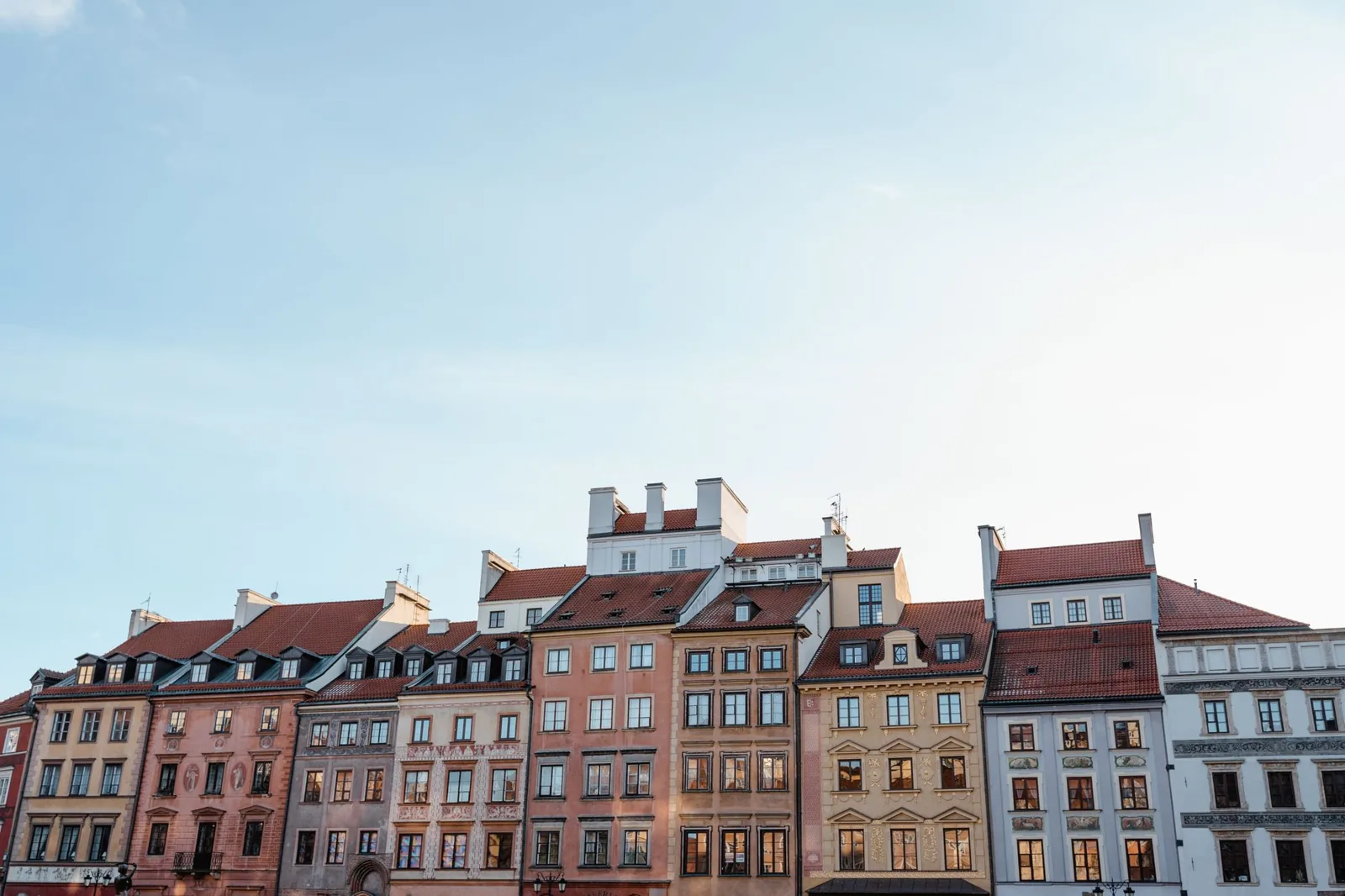
Buying a home in Poland involves a straightforward permit system for most buyers, taxes that are modest by comparison with the price of the property, and a purchase process built around a notary and a land and mortgage register. This guide sets out what the rules mean for a foreign buyer, what it typically costs on top of the asking price, how a transaction runs from offer to registration, and what our own catalogue shows about prices. The catalogue figures below describe listings on our site on 6 October 2026, a snapshot of asking prices rather than official statistics, and will shift as listings come and go. The legal and tax information is general, verified in October 2026, and rules and rates can change, so always confirm the current position with a local lawyer, notary or tax advisor before you commit to a purchase.
Can foreigners buy?
EU and EEA citizens can buy a home in Poland without any permit, on exactly the same basis as Polish nationals, whether the property is a house, an apartment or land. Non-EU citizens face an extra step: they need a permit from the Ministry of the Interior to buy a house or land, though apartments can be bought without a permit regardless of nationality. If you are a non-EU buyer with your eye on a house or a plot, it is worth building the permit application into your timeline early, since it sits alongside the usual preliminary agreement and notary work rather than replacing it.
Costs and taxes on top of the price
On a resale home, buyers pay a civil-law transactions tax known as PCC, set at 2 percent of the price. New-build homes are treated differently: VAT applies instead of PCC, so it is worth checking at the outset whether a property counts as new or resale. On top of whichever tax applies, notary fees, which are capped by law, together with court and land-register fees, add up to roughly 1 percent of the price. If you work with an agent, fees often run from 2 to 3 percent plus VAT, and practice on who pays, buyer or seller, varies, so it is worth asking before you make an offer.
- Civil-law transactions tax (PCC): 2 percent on resale homes; new builds carry VAT instead
- Notary, court and land-register fees: around 1 percent in total, with notary fees capped by law
- Agent fee: often 2 to 3 percent plus VAT; confirm who is expected to pay it
How the purchase works
A Polish purchase generally begins with a preliminary agreement between buyer and seller, setting out the terms before the final step. The final contract is then signed in front of a notary, whose role also covers registering the change of ownership in the land and mortgage register, the official record of who owns a property and what is secured against it. Because this registration is handled through the notary, it is a central part of the timeline rather than a separate administrative task to chase afterwards. One more practical point: prices in Poland are quoted in Polish zloty, and European Cribs converts these into euros for browsing, so the euro figure you see is a guide for comparison rather than the contractual price, which will be agreed in zloty.
What homes cost in our catalogue
On 6 October 2026, our catalogue listed 236 homes for sale in Poland. The median asking price across these listings was €391,000, with a lower quartile of €283,000 and an upper quartile of €639,000, giving a sense of the spread from more modest to higher-end listings. Only one of the 236 listings was priced under €100,000, so budget expectations in Poland's catalogue sit well above that threshold for most property types. Houses are the largest category, with 136 listings, followed by apartments at 72, townhouses at 25 and a single villa.
| Place | Listings | Median asking price |
|---|---|---|
| Warszawa | 85 | €556,000 |
| Kraków | 78 | €371,000 |
| Sopot | 71 | €279,000 |
Budget has a clear effect on how many listings come into reach: at the time of the snapshot, a budget of €100,000 matched 5 listings, a budget of €250,000 matched 52 listings, and a budget of €500,000 matched 48 listings.
Running costs and practicalities
Because prices are set in zloty, the euro figures in our catalogue move with the exchange rate applied at the time of conversion, so it is worth checking the current price in zloty directly before making an offer rather than relying solely on the euro figure. Non-EU buyers should factor the Ministry of the Interior permit into their planning whenever a house or land is involved, since this is the one step that does not apply to apartments or to EU and EEA buyers. Whichever category you fall into, allow time in your plans for the notary to prepare the final contract and complete registration in the land and mortgage register, and ask any agent involved to set out clearly, in writing, which fees fall to the buyer and which to the seller.
Before you view
A short checklist is useful before arranging viewings in Poland.
- Confirm whether you need a permit: none for EU and EEA citizens, a Ministry of the Interior permit for non-EU citizens buying a house or land, no permit for apartments
- Budget for PCC of 2 percent on a resale home, or VAT on a new build, plus roughly 1 percent for notary, court and land-register fees
- Clarify any agent fee, typically 2 to 3 percent plus VAT, and agree who pays it before you make an offer
- Remember that catalogue prices are quoted by us in euros after conversion from Polish zloty, and check the zloty price before committing
- Ask a local lawyer, notary or tax advisor to confirm the current rules and figures that apply to your specific purchase
Browse current homes for sale in Poland, estimate taxes and fees with the buying-costs calculator, or read the latest Journal article on Poland.
Rules, taxes and fees are general information verified in October 2026 and can change; regional rules may differ. Catalogue figures are asking prices of homes listed in the European Cribs catalogue on 6 October 2026 and are not official statistics. This guide is not legal, tax or investment advice — for an actual purchase, work with a local lawyer, notary or tax advisor. Cover photo: MART PRODUCTION / Pexels.
Browse homes for sale in Poland
Curated homes for sale across Europe — updated every Saturday
Browse Properties